
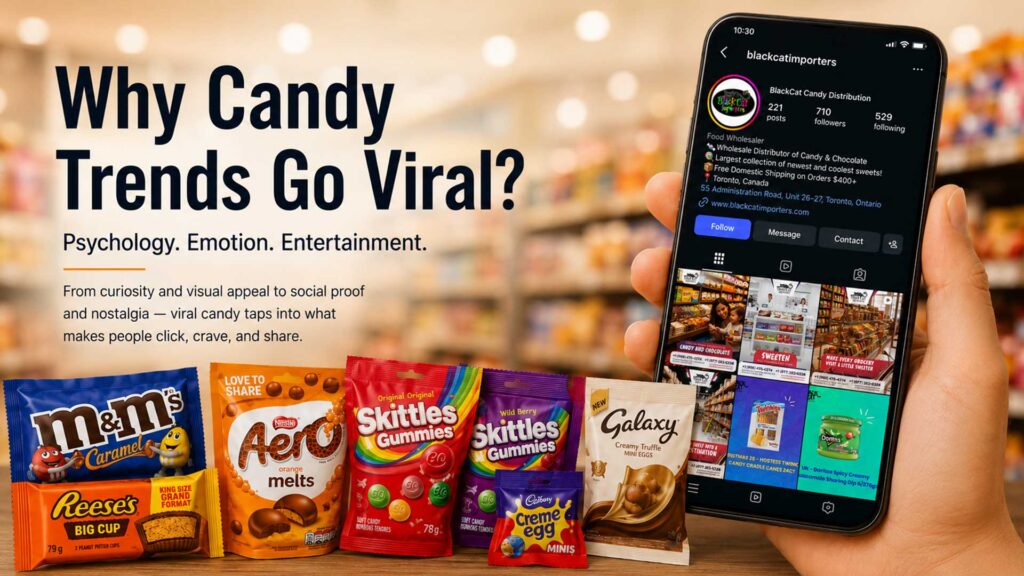
Why Consumers Become Obsessed with Trending Snacks & Sweets
Viral candy trends are reshaping the way consumers discover and purchase sweets around the world. While flavour remains important, modern buying decisions are increasingly influenced by psychology, social media, emotional engagement, and entertainment value. Products that generate excitement online often create rapid demand because consumers want to participate in shared experiences and emerging trends.
Retailers closely monitor viral candy trends because they can influence purchasing behaviour almost immediately.
This is one of the main reasons viral candy trends have become so powerful in recent years.
Products that suddenly explode in popularity online often create massive retail demand within days. Candy products that gain attention on TikTok, Instagram, YouTube, or influencer platforms quickly become highly desirable among consumers looking to participate in online trends and shared experiences.
But what actually makes candy go viral?
The answer is closely connected to human psychology.
The Power of Curiosity in Consumer Behaviour
One of the strongest psychological drivers behind viral candy is curiosity. Consumers naturally feel attracted to products that appear unusual, visually unique, or difficult to find. Candy with unexpected flavours, strange textures, interactive features, or creative packaging immediately attracts attention because it breaks normal expectations.
Many viral candy trends begin when consumers discover unusual flavours, textures, or packaging concepts.
This feeling of novelty activates emotional interest.
People enjoy discovering products that feel new and exciting because the human brain is naturally drawn toward unfamiliar experiences. This explains why imported candy, novelty sweets, and international snacks often gain rapid popularity online.
Why Visual Presentation Matters
Visual presentation also plays a massive role.
Bright colours, unusual shapes, satisfying textures, and creative packaging make candy highly shareable on social media platforms. Consumers are far more likely to post, record, or recommend products that create visual excitement.
This is why many viral candy products focus heavily on appearance as much as flavour.
Interactive Candy Creates Stronger Engagement
Interactive products are especially powerful within the modern confectionery market.
DIY candy kits, toy candy, surprise sweets, and character-themed products create entertainment experiences rather than simple food purchases. Consumers feel emotionally engaged because these products encourage participation, creativity, and social sharing.
Children, teenagers, and younger adults are particularly influenced by these interactive experiences.
The Influence of Social Proof and Influencers
Social media platforms continue to accelerate viral candy trends across multiple age groups.
When consumers repeatedly see influencers, creators, or large groups of people discussing a specific product online, the product automatically gains perceived value. People begin to believe the candy must be worth trying because everyone else appears interested in it.
This behaviour is extremely common on platforms such as TikTok.
A single viral video featuring a unique Japanese snack or imported sour candy can generate millions of views within hours. Retailers then experience immediate increases in customer demand because consumers want to experience the product themselves.
How Fear of Missing Out Drives Purchases
Fear of missing out also contributes significantly to viral candy culture.
Limited-edition products, seasonal releases, and hard-to-find imported snacks create urgency among consumers. When people believe a product may disappear quickly, they often make faster purchasing decisions.
This urgency increases impulse buying behaviour.
Why Nostalgic Candy Remains Popular
Some viral candy trends are driven by emotional connections to childhood favourites.
Retro candy products continue to perform extremely well because they reconnect consumers with childhood memories and emotional experiences. Candy is closely connected to positive emotional recall, which makes nostalgic products highly effective in retail environments.
Products from the 80s and 90s often create strong emotional reactions among adult consumers who enjoy reliving familiar experiences from earlier stages of life.
The rise of global snack culture has also expanded the viral candy phenomenon.
Consumers today are exposed to international food trends more than ever before. Social media has removed geographic barriers, allowing people to discover snacks and sweets from Japan, Mexico, Korea, Turkey, the UK, and many other countries instantly.
As a result, imported candy has become part of entertainment culture rather than simply food consumption.
What Viral Candy Trends Mean for Retailers
Retailers that understand these psychological trends are often able to create stronger product strategies and increase customer engagement significantly. Understanding viral candy trends helps retailers identify products with strong market potential.
Businesses that offer visually exciting, nostalgic, interactive, or internationally trending products often generate stronger impulse purchases and higher customer curiosity.
The future of candy marketing will likely continue moving toward experience-based purchasing behaviour.
Consumers increasingly want products that create excitement, emotional engagement, and social interaction.
This is exactly why viral candy trends continue to reshape the global confectionery industry.
Black Cat Importers continues to monitor emerging snack and candy trends worldwide, helping Canadian retailers access exciting imported products that align with modern consumer psychology and rapidly evolving market demand.